
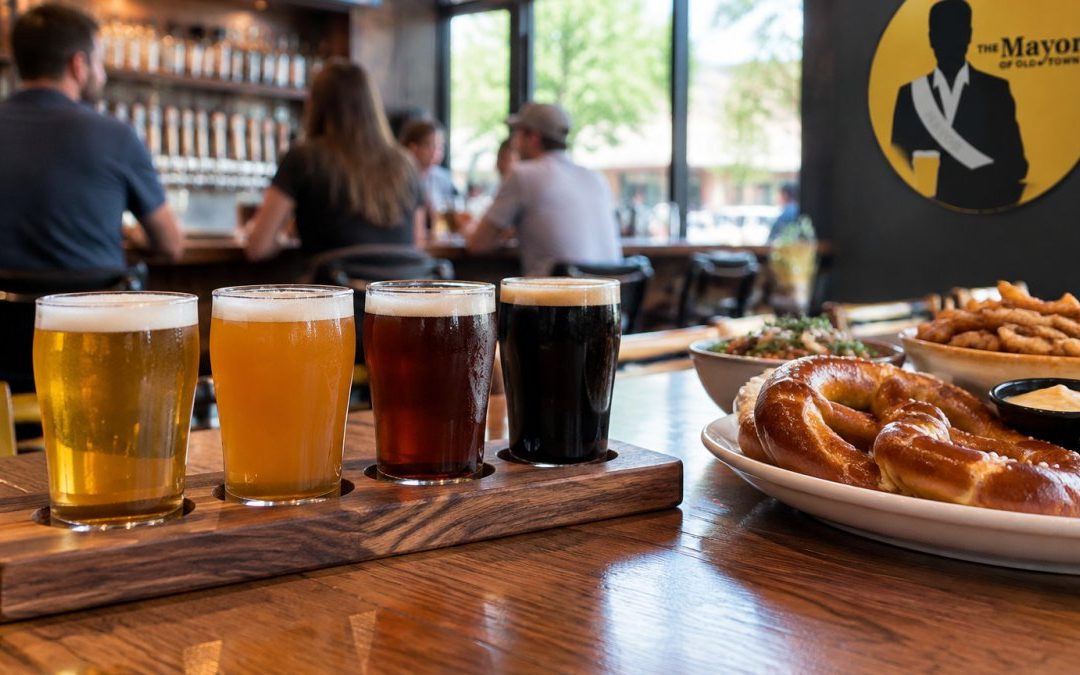
Last Updated: November 12, 2026
Quick Summary
The best Coopersmiths alternatives for craft beer are bars with rotating taps rather than a fixed brewpub lineup, so your list changes as kegs kick. Compare each spot on tap breadth and rotation, room noise, food quality, and Friday crowds, then build a short list of three or four regular spots.
- A beer bar pours what’s good right now, while a brewpub pours only what it brews.
- Judge a beer bar by style range across lagers, sours, IPAs, and Belgian pours, not tap count alone.
- For a quiet catch-up, pick a neighborhood taproom with booths, lower music, and spaced tables.
- Check whether a beer is draft-only or packaged before committing to a bar as your regular spot.
- A flight lets you try four or five styles for roughly the commitment of one pint.
Table of Contents
- Why Craft Beer Drinkers Look Beyond Coopersmiths
- How We Picked These Craft Beer Alternatives
- Style-by-Style Swaps for Coopersmiths Favorites
- Fort Collins Craft Beer Bars Worth a Visit
- Craft Beer Bars With Rotating Taps for Variety Seekers
- Where to Find Craft Beer and Food in Fort Collins
- Matching Your Preference to the Right Taproom
- Planning Your Next Craft Beer Outing
- Frequently Asked Questions
Why Craft Beer Drinkers Look Beyond Coopersmiths
Coopersmith’s is a familiar name in the Fort Collins craft beer scene, and plenty of locals still hold a soft spot for it. But loyalty and habit are different things.
A brewpub model that brews on-site and pours a fixed core lineup has strengths and limitations at once. Drinkers who’ve spent a few years exploring craft beer tend to drift toward bars where the list rotates and the staff can tell you why.
If you’re weighing a switch, two head-to-head breakdowns make the decision concrete: how Coopersmith’s compares with The Forge Pub and how it stacks up against The Moo House.
How We Picked These Craft Beer Alternatives
A common mistake is judging a beer bar by tap count alone. One hundred taps of the same six styles is worse than twenty that cover lagers, sours, IPAs, and something Belgian.
Style-by-Style Swaps for Coopersmiths Favorites
Beer styles are the shared language of craft beer, and once you know yours, any tap list stops being intimidating.
Tap lists change as kegs kick, so confirm the current pour before you build a night around it.
Lager, Pilsner, and Light Beer Alternatives
Lager drinkers often look for a craft pilsner or a German-style helles on draft: crisp, clean, and built for a second round. A well-made pilsner carries more malt character and a cleaner finish than most mass-market light beer.
What to compare on the menu: a pilsner should read as bready malt up front with a dry, snappy finish and restrained bitterness. A helles should be softer and rounder, with almost no hop bite. If the description leans on “crisp” and “clean” with no malt note, ask for a taste first.
Watch out: “light beer” on a tap list can mean a low-calorie ale rather than a true lager, so read the style line rather than the marketing name.
Amber Ale, Wheat Beer, and IPA Alternatives
Amber ale drinkers want malt with backbone and a balanced finish. The closest swaps are a Munich-style lager (toasty malt, clean finish, moderate bitterness) or an American brown ale (nutty, slightly roasty, gentle hops).
Wheat beer fans want soft, fruity, refreshing. A witbier keeps the soft body and adds citrus and spice from the yeast; a hazy pale ale keeps the pillowy mouthfeel but pushes hop aroma forward. To stay closest to the original, pick the witbier.
IPA loyalists have the widest runway. West Coast IPAs are bitter, dry, and pine-and-citrus forward, while hazy IPAs are softer, lower in perceived bitterness, and heavy on tropical aroma. Knowing which side you land on narrows the list fast.
Stout, Porter, and Dark Beer Alternatives
If your regular order is a dark pour, you’re chasing roast. A dry Irish stout delivers coffee-and-cocoa roast with a light body and low bitterness; an American porter runs sweeter and fuller, with caramel and chocolate notes. A Baltic porter or imperial stout is the step up in strength when you want those flavors amplified.
Compare on the menu by body and finish: a stout should finish dry and clean, a porter sweeter and rounder. If the description mentions “chewy” or “syrupy,” expect a heavier pour than a standard stout.
Sour and Belgian-Style Alternatives
Sour drinkers are usually chasing acidity and fruit, not hops. Look for a kettle sour or Berliner weisse for a clean, tart, low-bitterness pour, or a gose for a saline edge. On the Belgian side, a saison brings peppery yeast character and a dry finish, while a witbier covers the softer, citrusy end.
Non-Alcoholic and Low-Alcohol Swaps
If you’re cutting alcohol but not flavor, the swap is a non-alcoholic craft lager or a hop water rather than a mass-market near-beer. Hop water gives you aroma and bitterness with zero alcohol, while a non-alcoholic lager gets closer to a pilsner’s malt backbone. Availability is the constraint: most beer bars carry one or two options, so check the menu before you go.
Not sure where you land? This beginner’s guide to craft beer styles walks through the approachable end of the spectrum, from crisp lagers to softer wheat beers.
Fort Collins Craft Beer Bars Worth a Visit
The city’s craft beer culture runs deep, and the Brewers Association tracks how Colorado’s independent brewing sector grew into one of the country’s most concentrated.
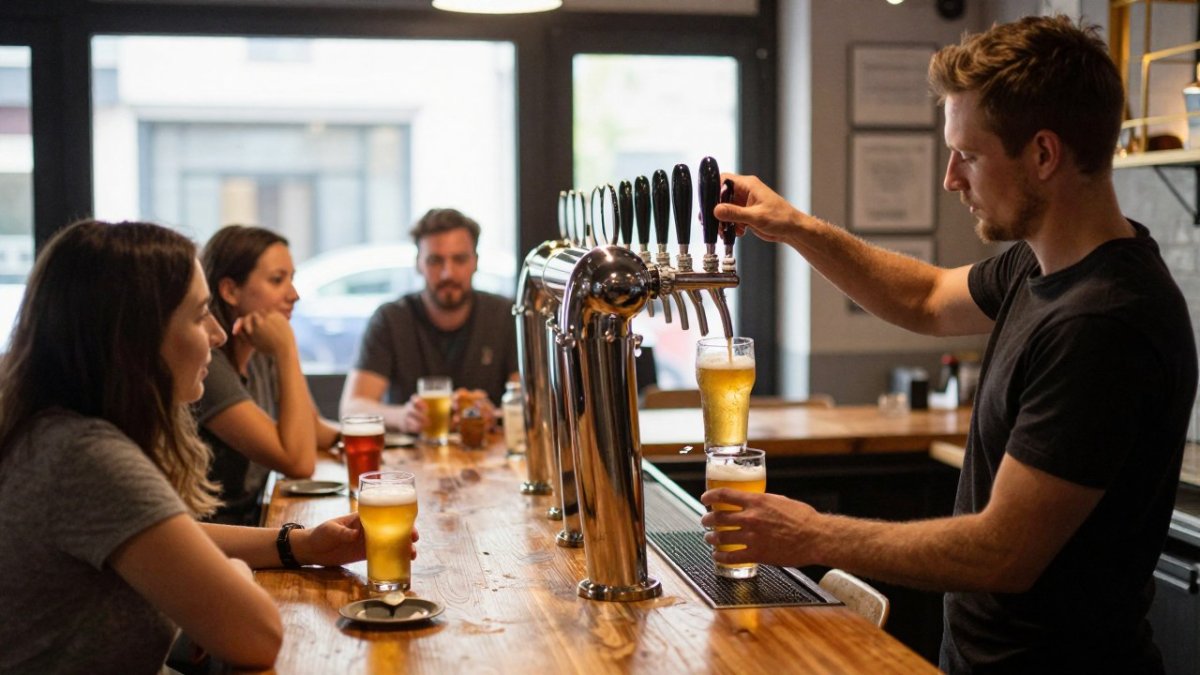
Rather than rank bars in the abstract, compare them on the four things that decide whether a night works: tap breadth and rotation, room noise, food quality, and how hard it is to get in on a Friday.
Old Town and Downtown Options
Old Town is the densest cluster, which makes it the easiest place to build a crawl. The trade-off is Friday and Saturday crowds, so an early start beats a long wait.
What to check before you go: whether the bar posts a current tap list online, whether it takes reservations for larger groups, and the current opening hours on the venue’s website.
Neighborhood Taprooms and Brewery Taps
Outside downtown, neighborhood taprooms trade foot traffic for space and quiet, booths, lower music, and tables spaced far enough apart to hear the person across from you. Brewery taprooms are the other half of this category: you get the brewery’s own beer rather than a curated list, so less variety but fresher pours.
Watch out: a brewery taproom’s list is limited to what that brewery makes, so if your group has mixed preferences, a beer bar with a broad list is the safer pick.
Availability: Draft, Cans, Bottles, and Retail
One thing most guides skip is where the alternatives actually live. A beer you love on draft may not be canned, and a canned release may never hit a tap list. Before you commit to a bar as your regular spot, check whether the beer is draft-only or packaged, whether the bar sells cans or bottles to go, and whether local retailers carry the same brewery’s packaged releases.
Tap lists change as kegs kick, so a bar that had your favorite last month may not have it this month. Follow the bar’s posted list and the brewery’s release schedule rather than assuming a pour is permanent.
How to Compare Bars Side by Side
Use the same four criteria for every bar you try, and the short list builds itself:
| Your Priority | What to Look For | Best Fit |
|---|---|---|
| Trying many styles | Large rotating list, flights available | Beer bar with 50+ taps |
| Conversation | Booths, lower music, spaced tables | Neighborhood taproom |
| Group outing | Space for 10+, reservation options | Bar with event space |
| Food-first | Full kitchen, pairing-friendly menu | Bar and restaurant combo |
| Fresh local beer | Colorado-focused list, brewery taps | Brewery taproom |
Our own room is the one we know best: 100 rotating beers on tap, a beautiful patio, and an extensive food menu. But the honest recommendation is to build a short list and work through it. Old Town alone gives you enough options for a proper pub crawl.
Craft Beer Bars With Rotating Taps for Variety Seekers
Rotating taps are the single biggest difference between a brewpub and a beer bar. A brewpub pours what it brews. A beer bar pours what’s good right now, and the list changes as kegs kick and new releases land.
Craft beer bars with rotating taps solve the boredom problem. You can visit the same room every month and drink something you’ve never had.
Want to get systematic about it? This step-by-step guide to finding rotating craft beer taps covers how to track lists, time your visits, and spot the bars that actually rotate rather than shuffle the same lineup.
Where to Find Craft Beer and Food in Fort Collins
Craft beer and food in Fort Collins used to mean burgers and fries, and that was fine. It’s not the standard anymore. The bars worth your time treat the kitchen as part of the experience, not an afterthought.
At The Mayor of Old Town, the menu is built to work with beer rather than compete with it. A hoppy IPA and a delicate dish fight each other, while a malt-forward ale and something roasted get along fine.
A few ordering principles that hold up anywhere:
- Match intensity: big beer with big food, light beer with light food
- Order a flight first if the list is unfamiliar
- Ask what’s freshest on draft that day
- Sit at the bar if you want recommendations
Matching Your Preference to the Right Taproom
The right taproom depends on the night you’re planning. A quiet catch-up, a group birthday, a first date, a solo pint with a book: each calls for a different room.
If you’re sampling before committing, learn how to build a craft beer flight. A flight lets you try four or five styles for roughly the commitment of one pint, and it’s the fastest way to find out what you actually like.
| Your Priority | What to Look For | Best Fit |
|---|---|---|
| Trying many styles | Large rotating list, flights available | Beer bar with 50+ taps |
| Conversation | Booths, lower music, spaced tables | Neighborhood taproom |
| Group outing | Space for 10+, reservation options | Bar with event space |
| Food-first | Full kitchen, pairing-friendly menu | Bar and restaurant combo |
| Fresh local beer | Colorado-focused list, brewery taps | Brewery taproom |
Best for: drinkers who want variety without a loud room. Skip if: you want a fixed, familiar lineup every visit.
Planning Your Next Craft Beer Outing
A good beer outing takes about fifteen minutes of planning. Check the current tap list online, decide whether you want food, and call ahead if your group is larger than six.
The bigger point: the best Coopersmiths alternatives for craft beer aren’t replacements for a place you love. They’re additions. Fort Collins is big enough for a rotation of three or four regular spots, and rotating is half the fun.
If your next night out calls for a tap list that actually changes, a patio worth sitting on, and a kitchen that keeps up, we’d like to host you.
Frequently Asked Questions
What are the best craft beer alternatives to Coopersmiths in Fort Collins?
Fort Collins has a deep bench of craft beer options beyond Coopersmiths. Look for taprooms with broad draft lists, rotating selections, and food menus so you can build a full evening around them. The best pick depends on whether you want a specific style, a wide variety, or a relaxed place to sit with a group. Check each venue’s current tap list before you go, since rotating taps change often.
Which Fort Collins craft beer bars have rotating taps?
Several Fort Collins craft beer bars rotate their taps regularly, which is the main draw for drinkers who want something new each visit. Rotating taps let a bar pour across styles, from crisp lagers and pilsners to amber ales, wheat beers, and IPAs, without brewing everything in-house. Ask the staff what changed recently and request a sample before committing to a full pour.
How do craft beer bars differ from brewpubs?
A brewpub brews on-site and typically pours mostly its own beer, while a craft beer bar sources from many breweries and can offer a wider range of styles and regions. Brewpubs often pair their house beers with a full food menu, and craft beer bars may do the same with guest taps. If variety matters most, a bar with rotating taps usually gives you more choices in one visit.
Where can I find craft beer and food in Fort Collins for a group?
Look for venues that combine an extensive food menu with a broad draft list. Contact the venue ahead of time to ask about accommodating larger groups.
