
Last Updated: October 30, 2026
Quick Summary
Craft beer is worth the cost when you drink for flavor rather than volume, since the premium pays for smaller batches, better ingredients, and fresher beer. Judge value by price per ounce of alcohol, not sticker price, because a stronger pour in a larger glass often closes the apparent gap.
- A 12-ounce pour at 6.5% ABV delivers roughly 56% more alcohol than one at 4.2%.
- Check the ABV and pour size, then divide to compare price per ounce of alcohol.
- Draft skips the bottle, label, and retail shelf, so taproom pours often deliver more beer per dollar.
- Homebrewing only saves money if you brew consistently enough to spread equipment costs across batches.
- Craft beer earns its premium for flavor explorers ordering flights, but rarely for crowd hosts buying volume.
Table of Contents
- Craft Beer vs. Domestic Beer: What the Price Gap Actually Buys
- Why Craft Beer Is Expensive: Where Your Money Goes
- Price per Serving vs. Price per Six-Pack: Reading the Real Cost
- Regional Pricing: Why the Same Beer Costs More in Some Places
- How to Choose Craft Beer That Earns Its Premium
- Homebrewing vs. Buying Craft Beer: A Fair Cost Comparison
- When the Premium Is Worth It for Your Drinking Style
- Build Your Own Flight at The Mayor of Old Town
- Frequently Asked Questions
Craft Beer vs. Domestic Beer: What the Price Gap Actually Buys
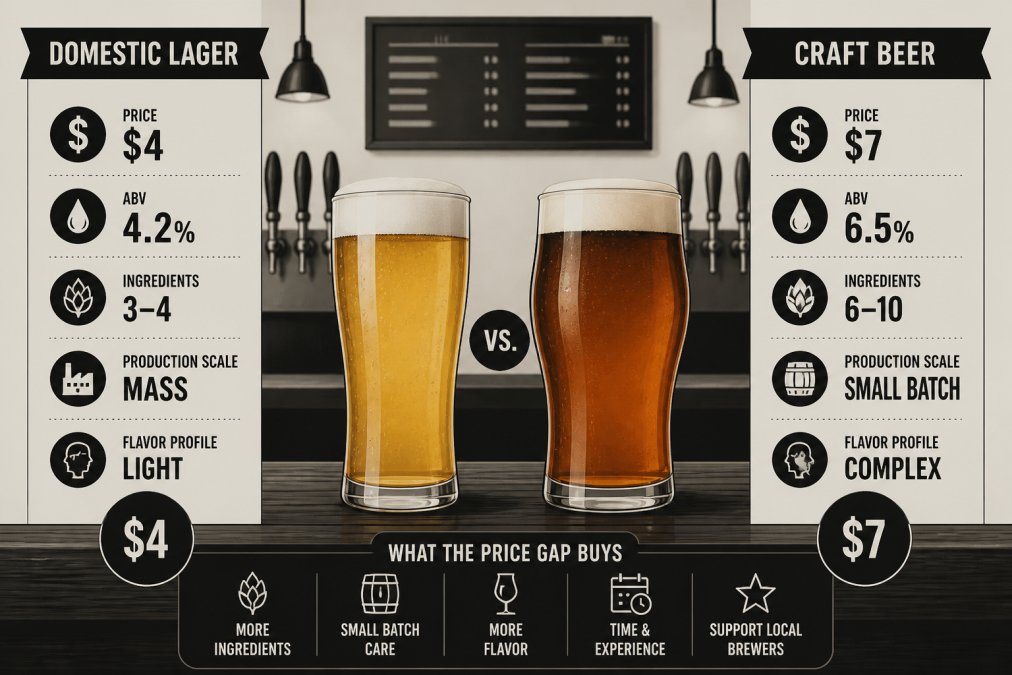
Walk into any taproom and the gap is obvious: a craft pour costs more than a domestic lager, sometimes twice as much. The question worth asking is what that extra money actually purchases.
Here is the short answer: you are paying for smaller batches, better raw ingredients, and a brewery that answers to its own palate instead of a boardroom.
A Like-for-Like Comparison by Serving Size and Alcohol Content
Most price arguments compare the wrong two numbers. A 12-ounce domestic lager at roughly 4.2% ABV and a 12-ounce craft IPA at roughly 6.5% ABV are not the same product, so comparing their shelf prices tells you almost nothing. The honest comparison normalizes for two things: ounces poured and ounces of pure alcohol delivered.
Here is the mechanism, step by step:
- Convert ABV to alcohol ounces. Multiply ounces poured by ABV. A 12-ounce pour at 4.2% delivers about 0.50 ounces of alcohol. A 12-ounce pour at 6.5% delivers about 0.78 ounces, roughly 56% more alcohol in the same glass.
- Divide price by alcohol ounces. If a domestic 12-ounce bottle costs less than a craft 12-ounce bottle, but the craft bottle carries more than half again the alcohol, the per-unit-of-alcohol gap is smaller than the sticker gap suggests.
- Adjust for pour size. A 16-ounce craft draft pour against a 12-ounce domestic bottle shifts the math again, you are buying 33% more liquid, so the per-ounce price of the craft pour can land closer to the domestic bottle than the menu board implies.
- Account for draft versus package. Draft skips the bottle, label, and retail shelf, which is why a taproom pour can deliver more beer per dollar than the same beer in a store.
The sticker price is not the value. Price per ounce of comparable-strength beer is. A stronger craft pour in a larger glass can close much of the apparent gap once you do the division, and a weaker craft session beer may not.
What the Premium Buys Beyond Alcohol
Alcohol content is only one axis. The rest of the premium buys things a domestic lager does not attempt: hop varieties that are expensive and perishable, malt bills built for flavor rather than cost, smaller batch sizes that preserve freshness, and a brewery that can change its recipe when the harvest changes. A domestic lager is typically optimized for consistency over time.
A Quick Way to Judge Value at the Bar
Before you commit to a pricier pour, do three things: check the ABV on the board, check the pour size, and divide. If the craft pour is stronger and larger, the per-ounce-of-alcohol gap is often narrower than the sticker suggests. If it is a low-ABV craft session beer at a premium price, you are paying for flavor and provenance rather than alcohol, which is a legitimate reason to buy, but a different one. Knowing which trade you are making is the whole point.
Why Craft Beer Is Expensive: Where Your Money Goes
Most of the premium never reaches the brewer’s pocket. It goes into the parts of brewing that do not scale down neatly: ingredients bought in small lots, labor-intensive small batches, packaging runs too short for volume discounts, and distribution through a three-tier system that adds a layer of markup at every stop.
Ingredient Quality, Batch Size, and Brewing Costs
A macrobrewery buys malt by the railcar and hops by the ton. A small independent brewer buys specialty malt by the pallet and aroma hops by the pound, often at contract prices that shift with each harvest. Batch size matters just as much. A 10-barrel batch spreads equipment, cleaning, and labor costs across a fraction of the volume a regional plant produces, so every keg carries more overhead.
Price per Serving vs. Price per Six-Pack: Reading the Real Cost
The sticker on a six-pack hides the number that matters. What you want is price per serving, adjusted for alcohol content. A stronger craft beer served in a smaller pour can land close to a domestic bottle on a per-ounce-of-alcohol basis, especially when you factor in that you may drink fewer of them. Packaged beer also carries retail markup that draft does not.
Regional Pricing: Why the Same Beer Costs More in Some Places
The identical beer can carry different prices a few hundred miles apart. State excise taxes, distribution rules, freight distance from the brewery, and local rent all push the retail price around. States with tighter control over alcohol sales add cost layers that open markets do not. For ideas on where to look, see our guide to finding unique craft beer in Colorado.
How to Choose Craft Beer That Earns Its Premium
Start with freshness and fit, not hype. A beer that matches your taste and was brewed recently beats a rare release that sat in a warehouse. Use this checklist before you commit to a pricier pour:
- Check the pour size and alcohol content so you can compare price per ounce
- Ask what is freshest on tap; hoppy styles fade fastest
- Match the style to your mood: crisp and light or dark and rich
If you want a deeper dive into what separates a good pour from a great one, our guide on what makes a quality craft beer breaks down the markers worth paying for.
Homebrewing vs. Buying Craft Beer: A Fair Cost Comparison
Homebrewing looks cheaper on paper and often is not, at least at first. The reason is that the comparison people usually make, ingredient kit versus retail six-pack, leaves out most of the actual cost. A fair comparison includes equipment, ingredients, time, batch size, failure risk, and ongoing costs, and it changes the answer depending on how much you brew.
The Cost Structure of a First Batch
A beginner’s homebrewing setup typically includes a fermenter, an airlock, a bottling bucket, a siphon, a hydrometer, cleaning and sanitizing supplies, and bottles. That equipment is a one-time cost, but it is front-loaded before your first drinkable batch. Ingredient kits, malt extract or grain, hops, yeast, and priming sugar, cost less per batch than buying the equivalent volume at retail, which is where the savings story comes from.
The Variables That Decide Whether You Actually Save
- Batch size. A standard 5-gallon batch produces roughly two cases of 12-ounce bottles. Smaller batches lower the ingredient outlay but spread equipment cost across less beer.
- Equipment tier. Extract brewing is cheaper to start; all-grain brewing costs more up front but lowers ingredient cost per batch over time.
- Temperature control. Fermentation temperature control is the most common hidden cost. Without it, off-flavors are more likely, and failed batches erase the savings.
- Time. A brew day runs several hours, plus cleaning, plus weeks of fermentation and conditioning. That time is not a cash cost, but it is a real one.
The savings comparison only works if you brew consistently. A homebrewer who makes two batches a year rarely recoups the equipment cost; one who brews monthly usually does, and one who chases specific styles through trial and error may spend more than they save.
When Homebrewing Saves Money, and When It Does Not
Homebrewing tends to save money for people who brew regularly, keep equipment simple, and treat it as a hobby they would pursue anyway. It tends not to save money for people who brew occasionally, buy premium equipment, or count their time as a cost. Scaling up your operation to include home craft beer kegs shifts the balance of convenience and cost even further, requiring a careful look at whether the increased volume justifies the added complexity of your setup.
When the Premium Is Worth It for Your Drinking Style
Craft beer earns its price when you drink for flavor rather than volume. If you want one excellent pour and a conversation, the premium is easy to justify. If you are buying for a crowd that mostly wants something cold and familiar, domestic does the job. Our guide to the best craft beer bars in Fort Collins covers places where the premium experience is worth it.
| Drinking style | What you want | Where the premium pays off |
|---|---|---|
| Flavor explorer | Variety and new styles | Yes, flights and rotating taps |
| Casual social drinker | Easy, familiar pours | Sometimes, a single good glass |
| Crowd host | Volume and broad appeal | Rarely, stick with familiar |
| Homebrewer | Control and process | Only for research and reference |
Build Your Own Flight at The Mayor of Old Town
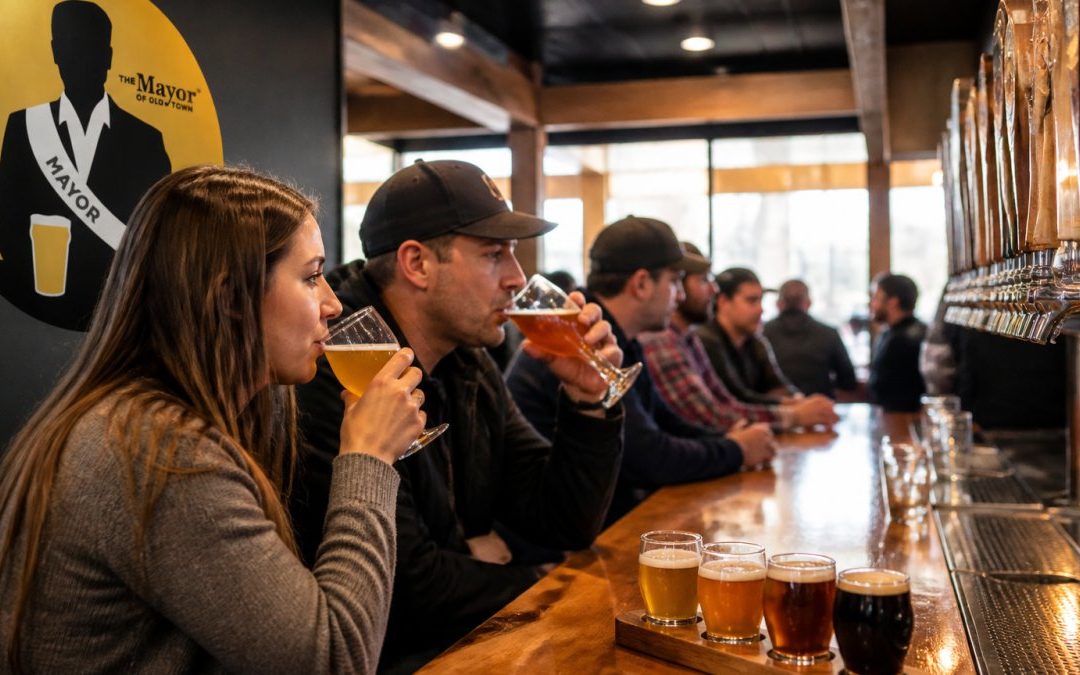
The best way to settle the value question is to taste it side by side. A flight lets you line up a domestic-style lager against a local IPA and a seasonal pour, then decide with your own palate which one earns the extra dollar. Our beginner’s guide to choosing craft beer flights walks through how to pick a set of pours.
We have been a Fort Collins staple for over 15 years. With 100 rotating taps, there is always something fresh to test the math against, and our food menu is more extensive than standard bar fare. Bring your group, take your time, and let the flight do the arguing.
Frequently Asked Questions
Why does craft beer cost more than domestic beer?
The gap comes from scale and ingredients. Large breweries brew in enormous batches that spread equipment, labor, and distribution costs across millions of barrels. A craft brewer runs smaller batches, often pays more per pound for specialty malt and hops, and absorbs higher packaging and freight costs per ounce. That means a bigger share of what you pay goes into the liquid itself rather than into national advertising or mass distribution.
Is craft beer better quality than domestic beer?
Quality is not automatic on either side, but craft beer gives you more ways to judge it. Smaller batches let brewers adjust recipes, use fresher hops, and release seasonal and limited runs. Check packaging dates, ask what is freshest on tap, and taste before committing to a full pour. A rotating tap list is a useful signal because it shows the bar is turning stock rather than sitting on old kegs.
How can you tell if a craft beer is worth the price?
Compare price per serving rather than sticker price, and factor in alcohol content. A higher-ABV pour at a slightly higher price can cost less per unit of alcohol than a cheap low-ABV option. Then judge the beer on freshness, flavor, and whether the style matches what you actually like. If a bar lets you sample or order a flight first, you can confirm the beer earns its premium before buying a full glass.
Is it cheaper to make your own beer?
Homebrewing can lower cost per serving once you own the equipment, but startup costs for kettles, fermenters, and bottling gear are real, and your first few batches may not match what you get from a taproom. It also takes time, sanitation discipline, and space. For most drinkers, homebrewing works best as a creative hobby rather than a pure savings plan, especially when a local bar offers a wide rotating selection.
The honest test of whether craft beer is worth the cost is a side-by-side taste, not a spreadsheet. The Mayor of Old Town makes that easy with 100 rotating beers on tap, a beautiful patio for a relaxed evening, and an extensive food menu that keeps the whole table happy. Get started with The Mayor of Old Town and build a flight that answers the question for yourself.
