
Table of Contents
- What to Look for in Craft Beer Before Your First Sip
- How to Taste Craft Beer: A Simple Four-Step Method
- Craft Beer Styles for Beginners: What Each One Should Taste Like
- How to Read a Beer Label Without Guessing
- Questions to Ask When Ordering Craft Beer
- How to Judge Freshness and Quality on Tap
- Common Bad Advice About Craft Beer to Ignore
- Frequently Asked Questions
Last Updated: October 18, 2026
What to Look for in Craft Beer Before Your First Sip
Knowing what to look for in craft beer starts with three things: a clean pour, a fresh aroma, and a menu that tells you what you’re actually drinking. At The Mayor of Old Town, we’ve poured a lot of beer over the years, and those three signals separate a great glass from a forgettable one. This guide covers how to taste craft beer, which styles suit beginners, and how to read a label without guessing.
Here’s the part most guides skip: quality shows up before the beer touches your lips. A proper head, correct serving temperature, and a glass that matches the style tell you plenty. Below, we’ll show you exactly how to spot all three.
Ask your bartender which taps turned over most recently. A keg that’s been sitting for weeks tastes flat and dull, while a fresh pour has a livelier aroma and carbonation.
How to Taste Craft Beer: A Simple Four-Step Method
The best way to taste craft beer is a four-step sequence: look, smell, taste, then judge the finish. Each step takes seconds, and together they give you a complete read on the glass in front of you.
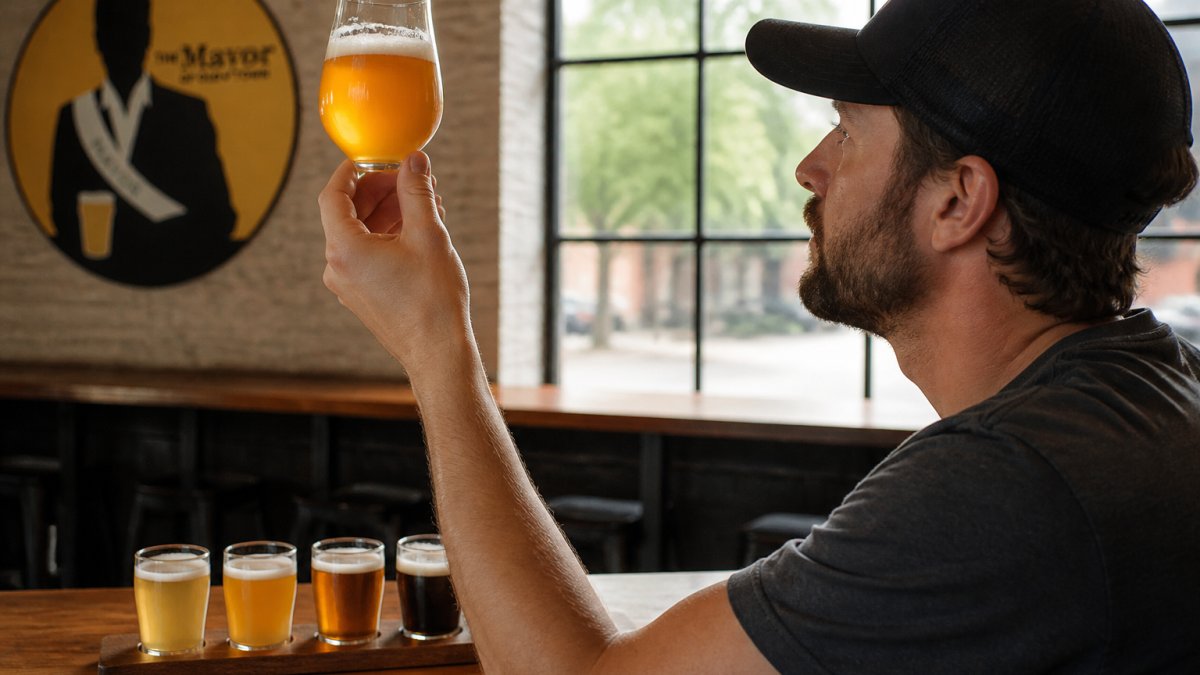
Look, Smell, Taste, Finish
- Look: Hold the glass to the light. Check clarity, color, and head retention. A thin, fizzy head that vanishes in seconds hints at a pour problem.
- Smell: Swirl gently, then take a short sniff. You’re checking for malt sweetness, hop character, and anything off like wet cardboard or butter.
- Taste: Take a small sip and let it coat your tongue. Note the malt backbone first, then the hop bitterness and any yeast character.
- Finish: Swallow and wait. A clean finish fades pleasantly; a harsh or lingering bitterness points to a flaw.
Many drinkers rush straight to the taste step. Slow down. The aroma step does most of the work, and a quick sniff tells you more about a beer than a dozen sips.
Serving temperature matters more than most people think. An ice-cold glass mutes aroma and flavor, so let a stout or barleywine warm slightly before you judge it.
Craft Beer Styles for Beginners: What Each One Should Taste Like
Craft beer styles for beginners break into a few approachable families, and each has a signature you can learn to recognize. Start with lighter, cleaner styles before moving to hop-forward or barrel-aged options.
Ales vs. Lagers in Plain Terms
Ales are brewed with top-fermenting yeast at warmer temperatures, which produces fruity, complex flavors. Lagers use bottom-fermenting yeast at cooler temperatures, giving a crisp, clean profile. That’s the core difference, and it shapes everything else.
| Style | What to Expect | Good Starting Point If… |
|---|---|---|
| Pale ale | Balanced malt, citrusy hops | You want a middle ground |
| Pilsner | Crisp, dry, light bitterness | You’re new to craft beer |
| Stout | Roasty, chocolate, coffee notes | You like dark coffee |
| Wheat ale | Soft, bready, low bitterness | You prefer easy drinking |
| IPA | Bold hop aroma, firm bitterness | You like big flavor |
A common mistake is starting with the hoppiest IPA on the board. It’s a bold beer, and it can overwhelm a palate that hasn’t adjusted yet. Try a pilsner or wheat ale first, then work up.
How to Read a Beer Label Without Guessing
Reading a beer label comes down to four details: style, ABV, IBU, and freshness. The style name tells you what to expect, ABV (alcohol by volume) tells you the strength, and IBU (international bitterness units) gives a rough read on hop bitterness. Freshness is the one most people ignore.
Look for a packaged-on or best-by date. Beer is perishable, and hop-forward styles fade fastest. A date stamp tells you more about what’s in the glass than any marketing copy on the front.
When in doubt, trust the date over the description. A fresh, simple beer usually beats an old, ambitious one.
Questions to Ask When Ordering Craft Beer
The right questions when ordering craft beer get you a better glass and a better experience. Ask your bartender what’s freshest, what’s local, and what matches your taste. A good beer bar wants to talk about the taps, so lean on that.
Here’s what we’d ask:
- Which taps are pouring freshest right now?
- What’s the ABV on this one?
- Is this a rotating seasonal or a year-round pour?
- What would you recommend if I usually drink [a style you know]?
- Can I get a small pour to try before committing?
That last one matters. Many bars offer a taste, and it’s the fastest way to avoid ordering a full glass you don’t enjoy.
How to Judge Freshness and Quality on Tap
Freshness and quality on tap come down to a few visible signals: a clean head, correct carbonation, and a glass that smells right. A well-maintained tap line pours a beer with a proper foam stand and no off aromas. If something smells like vinegar or cardboard, send it back.
At The Mayor of Old Town, we rotate 100 beers on tap, which means we’re constantly turning kegs over and keeping lines clean. That rotation is why freshness matters to us: a tap list that never changes is a tap list that’s probably sitting on old beer.
Watch the pour. A bartender who tilts the glass and builds the head slowly is giving you a better beer than one who blasts it down the side.
Common Bad Advice About Craft Beer to Ignore
A lot of craft beer advice sounds smart but leads you wrong. Here are the ones we hear most.
“The colder, the better.” Wrong. Cold mutes flavor and aroma. Serving temperature should match the style, and lighter beers can handle colder pours while stouts and strong ales want a bit of warmth.
“Higher IBU means better beer.” Bitterness is a preference, not a quality mark. A balanced pilsner can be more impressive than a hop bomb.
“Dark beer is heavy.” Color says nothing about strength. A dark mild can be lighter than a pale ale.
“Anything on tap is fresh.” Not necessarily. A neglected tap line ruins a good keg. Ask questions, and trust your nose.
The Brewers Association style guidelines are a useful reference if you want to understand what a style is supposed to taste like before you judge it.
Finding great craft beer comes down to paying attention: how it looks, how it smells, how it finishes, and how fresh it is. That’s the whole game. At The Mayor of Old Town, we keep 100 rotating beers on tap so there’s always something fresh to explore, paired with an extensive food menu and a laid-back atmosphere that’s been a local staple for over 15 years. Whether you’re a curious beginner or a seasoned regular, our team is happy to walk you through the board and find your next favorite pour. Stop in, ask questions, and order online when you’re ready.
Frequently Asked Questions
What should you look for when tasting craft beer?
Start with appearance: color, clarity, and head retention tell you a lot before you sip. Then smell the beer, since most of what you perceive as flavor comes from aroma. Take a small sip and note the malt sweetness, hop bitterness, and mouthfeel. Finish matters too, because a clean finish signals balance while a harsh or lingering one can point to a flaw. Judge the beer against its style, not against your personal favorite.
How can you tell if a craft beer is fresh?
Freshness shows up in the aroma first. A fresh beer smells like its ingredients: bright citrus, pine, roasted grain, or fresh bread. Stale beer smells like cardboard, paper, or cooked vegetables. On tap, ask when the keg was tapped and how long it has been on the line. A bar with fast turnover, like one pouring 100 rotating taps, is more likely to serve beer close to its peak.
How do you choose a craft beer style if you are new to it?
Start with what you already drink. If you like coffee, try a stout or porter. If you like light lagers, try a pilsner or kolsch. If you enjoy citrus flavors, a pale ale or hazy IPA is a natural next step. Ask for a small sample before committing to a full pour. Most taprooms will pour a taste so you can check the style against your palate before ordering a pint.
What should you look for on a craft beer label?
Look for the style name, ABV (alcohol by volume), and IBU (international bitterness units) if listed. The style tells you what to expect in flavor, ABV tells you how strong it is, and IBU gives a rough sense of bitterness. Check for a packaged-on or best-by date when available, since hops fade over time. Brewery name and location matter too, because local breweries often package fresher beer.
How do you describe the flavor of craft beer?
Use plain language and compare to things you already know. Say ‘grapefruit and pine’ for a West Coast IPA, ‘chocolate and roasted coffee’ for a stout, or ‘bready and slightly sweet’ for an amber ale. Mention mouthfeel too: light and crisp, creamy, or full-bodied. Finish matters as well, so note whether the flavor fades quickly or lingers. Specific comparisons communicate better than vague words like ‘good’ or ‘smooth.’
What makes a beer a craft beer?
The Brewers Association defines a craft brewery as small (producing 6 million barrels or less per year), independent (less than 25% owned by a beverage alcohol industry member that is not itself a craft brewer), and traditional (using mostly malted barley and adjuncts to enhance rather than lighten flavor). In practice, craft beer means beer made by a brewery that prioritizes flavor and independence over mass production.
What should you ask a bartender when choosing a craft beer?
Ask what is freshest on tap right now, which styles are pouring well, and whether you can taste a sample before ordering. If you are unsure about a style, describe what you usually drink and let the bartender recommend a match. Ask about ABV if you plan to have more than one. A good bartender will steer you toward a beer you will actually enjoy rather than the most expensive pour.