
Table of Contents
- Finding Unique Craft Beer in Colorado: A Regional Approach
- Beyond the Usual: How to Find Unique Beer Styles
- How to Read a Beer Menu Like a Local
- Craft Beer Tasting Flights: A Practical Strategy
- Beer Tasting Notes: What to Record and Why
- Getting Around: Transportation and Responsible Tasting
- Accessibility, Food, and Group-Friendly Taprooms
- Conclusion: Building Your Own Colorado Beer Route
- Frequently Asked Questions
Last Updated: October 12, 2026
Finding Unique Craft Beer in Colorado: A Regional Approach
Finding unique craft beer in Colorado starts with a simple shift in mindset: stop chasing the biggest names, and start following the small-batch taps. This guide from The Mayor of Old Town covers how to do exactly that, region by region.
Here’s the tension most beer guides ignore: the beer that makes a trip memorable is rarely the beer with the biggest marketing budget.
The best route through Colorado beer isn’t a list of famous breweries. It’s a regional plan that puts you in taprooms where the rotating, small-batch and experimental pours actually live.
How This Guide Selects Its Stops
Before the regions, the criteria. Every destination below earns its place on at least two of these signals:
- A rotating or limited tap list that changes often enough to reward a return visit
- A production scale small enough that taproom-only releases stay in the taproom
- A walkable cluster so you can hit two or three spots without moving the car
What this guide does not do is rank by fame. A taproom pouring the same six flagships in a historic building is a nice afternoon, not a discovery. The stops below are chosen for what’s in the glass, and the regional structure exists so you can plan a real route instead of a list of disconnected addresses.
Front Range and Denver Metro
The Front Range delivers the highest concentration of taprooms in the state, which cuts both ways. Denver, Boulder and Fort Collins together hold hundreds of licensed breweries, so the real skill is filtering.
Fort Collins deserves a full evening on any Front Range itinerary.
For Denver proper, aim for neighborhoods rather than downtown clusters. RiNo and the Santa Fe Arts District reward wandering, and both put multiple taprooms within a short walk.
Mountain Towns and High-Country Taprooms
Mountain taprooms trade volume for character, and that trade works in your favor.
What most guides miss is the timing problem. High-country taprooms in ski towns swing hard with the seasons: quiet midweek in shoulder season, packed on powder days.
A practical high-country loop strings Nederland to Buena Vista along the Peak to Peak and US-285 corridors, with a Vail stop on the I-70 leg.
Building a Multi-Stop Route
A regional approach only pays off if you sequence the stops. Three rules keep a route workable:
- One walkable cluster per night. Pick a neighborhood or a compact town and stay on foot. Fort Collins and Boulder both support this; so do Denver’s RiNo and Santa Fe Arts District.
- Save the mountain leg for daylight. High-country roads and shoulder-season weather don’t mix with an evening tasting schedule.
- Front-load the unfamiliar. Hit the rotating-tap and small-batch spots first, while your palate is fresh, and leave the flagships for last, or skip them entirely.
Beyond the Usual: How to Find Unique Beer Styles
Unique beer styles hide in plain sight once you know which signals to read. The Brewers Association craft beer style guidelines document the full range of recognized styles, and most taprooms will pour something outside the top ten. Look for these markers on a tap list:
- Style names you don’t recognize (gruit, Lichtenhainer, Kentucky common)
- Barrel-aged or wild-fermented entries, which are almost always limited
- Single-hop or single-farm releases, where the ingredient is the story
A common mistake is assuming a “unique venue” equals unique beer. A historic building pouring the same six flagships isn’t a discovery. Ask what’s been on tap less than a week.
Where Unusual Beer Actually Comes From
Unusual styles don’t appear at random. They come from four predictable sources, and knowing them lets you plan instead of hope:
- Taproom-only releases. Small batches that never get packaged or distributed. If a brewery can’t ship it, the taproom is the only place it exists.
- Barrel and wild programs. Sour and barrel-aged beers take months or years, so they release in small, dated drops rather than year-round.
- Seasonal windows. Fresh-hop beers land in late summer and early fall; winter warmers and barrel releases cluster in the colder months. Timing a visit to a season is the single easiest way to drink something rare.
How to Hunt Them
A few habits separate a beer hunter from a casual drinker:
- Check the tap list before you go. Most taprooms post current handles online, and a list that changes weekly tells you the brewery is actively experimenting.
- Ask what’s new, not what’s good. “What’s been on less than a week?” surfaces fresh releases; “what’s good?” surfaces the bestseller.
- Order the small pour first. A four-ounce taste of an unfamiliar style costs you nothing but a few minutes if you don’t like it.
- Follow release calendars. Breweries announce limited drops on their own channels, and the good ones sell through fast.
- Go early in the day. Limited kegs kick, and the tap list is fullest at open.
Ask the bartender one question: “What’s the weirdest thing you have right now?” Staff pour what they’re proud of, and that answer beats any menu description.
Reading the Signals on a Tap List
Once you’re looking at a board, a few patterns tell you where the unusual beer is hiding:
| Tap List Signal | What It Usually Means |
|---|---|
| A style you can’t pronounce | The brewer is experimenting, not chasing volume |
| “Taproom only” or “limited” | Small batch, no distribution, drink it here |
| A vintage or batch date | Barrel or wild release, often aged a year or more |
| A single-farm or single-hop tag | Ingredient-driven, usually a small run |
| A collaboration credit | Brewed once, rarely repeated |
The Alcohol and Tobacco Tax and Trade Bureau regulates labeling on packaged beer, which is why taproom-only releases often carry less detail than bottles. When in doubt, ask.
How to Read a Beer Menu Like a Local
Reading a beer menu well is a skill, and it takes about two visits to learn. Menus are usually organized by strength or by style family, not by flavor. ABV and IBU numbers tell you more than the names do: high IBU means bitterness, high ABV means slow down.
Watch for these menu conventions:
| Menu Signal | What It Usually Means | What To Do |
|---|---|---|
| “Rotating” or “guest tap” | Limited supply, changes weekly | Order it now, it may be gone |
| Nitro pour | Smoother, lower carbonation | Good entry point for dark beers |
| Barrel-aged | Higher ABV, richer flavor | Order a short pour, not a pint |
| “Experimental” | Brewer testing a new recipe | Ask for a taste before committing |
The Alcohol and Tobacco Tax and Trade Bureau regulates labeling on packaged beer, which is why taproom-only releases often carry less detail than bottles. When in doubt, ask.
Craft Beer Tasting Flights: A Practical Strategy
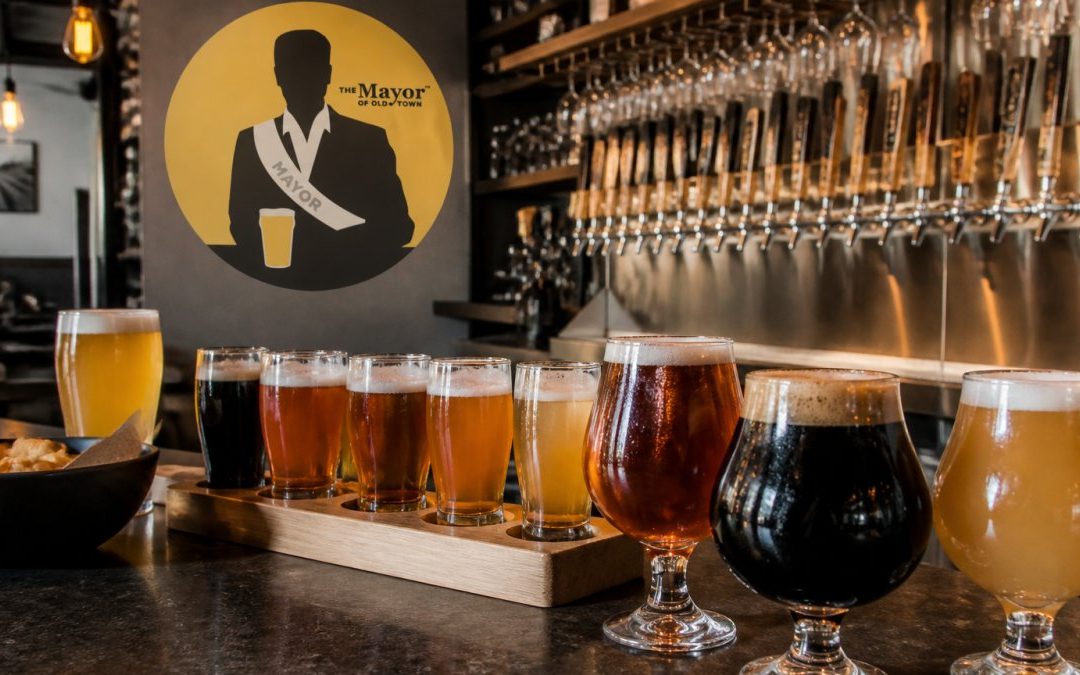
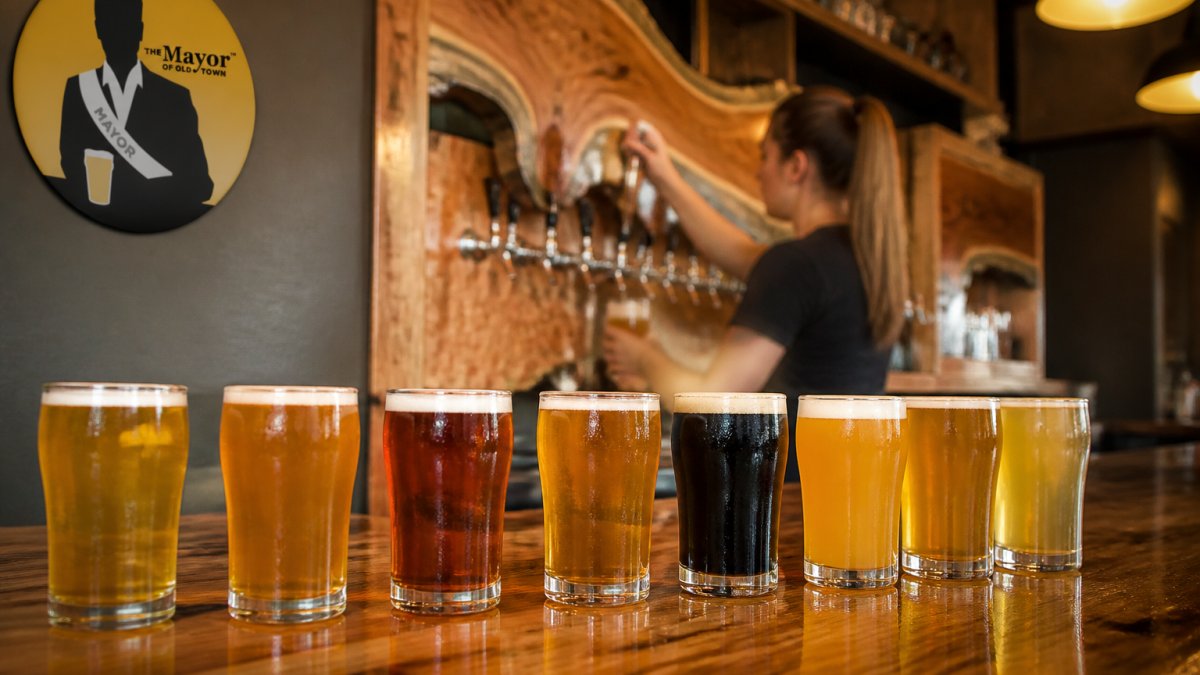
Craft beer tasting flights solve the biggest problem in a good taproom: too many options, one liver. A flight of four to six small pours lets you cover real ground without committing to a pint you don’t love.
Build flights with contrast, not similarity. Order lightest to darkest, and split the flight into two styles you know and two you don’t. That way you always have a fallback and always learn something.
Don’t order a flight of six imperial stouts. High-ABV flights hit hard, kill your palate by pour three, and make the rest of the evening a blur.
Beer Tasting Notes: What to Record and Why
Beer tasting notes are the difference between a fun afternoon and a beer list you can actually use later. You don’t need a scoring rubric. You need three fields: what it was, where you had it, and whether you’d order it again.
Record these four things per beer:
- Brewery and beer name (exact, including the batch if listed)
- Style and ABV
- One flavor word (citrus, roast, funk, pine)
- Would you order it again (yes, no, or maybe)
Photos of tap lists work, but they pile up. A notes app entry takes ten seconds and pays off the next time you’re standing at a bar trying to remember that one saison.
Getting Around: Transportation and Responsible Tasting
Transportation planning is the part of a Colorado beer trip people skip, and it’s the part that ruins the trip. Front Range taprooms cluster in walkable pockets, so pick one neighborhood per night and stay on foot.
For mountain routes, designate a driver or book a ride. The National Highway Traffic Safety Administration is blunt about impairment: buzzed driving is drunk driving, and altitude makes alcohol hit harder than it does at sea level.
Eat first, and drink a full glass of water between every two pours. At Colorado altitude, that’s not caution, it’s logistics.
Accessibility, Food, and Group-Friendly Taprooms
Group-friendly taprooms separate a good night from a great one, especially when your party has mixed drinkers and non-drinkers.
A taproom with a full kitchen handles a group of fifteen far better than one relying on a rotating food truck.
At The Mayor of Old Town, that combination is the point: an extensive food menu, a comfortable interior, a patio, and room for larger groups.
| Group Need | What To Look For | Why It Matters |
|---|---|---|
| Mixed drinkers | Full food menu, non-alcoholic options | Nobody feels stuck with bar snacks |
| Large parties | Reserved seating, call-ahead policy | Avoids a split-up group |
| Quiet conversation | Spacious layout, patio | You can actually hear each other |
Conclusion: Building Your Own Colorado Beer Route
Building a Colorado beer route is less about a perfect list and more about a repeatable method. Pick a region, filter for rotating and limited taps, build flights with contrast, and record what you drink.
That’s the approach we take at The Mayor of Old Town. With 100 rotating beers on tap, an extensive food menu, a beautiful patio, and space for groups, we built the kind of taproom where discovery is the default.
Frequently Asked Questions
What makes a craft beer unique?
A craft beer stands out when it uses an unusual yeast strain, a local ingredient like Colorado-grown hops or fruit, a barrel-aging program, or a style you rarely see on tap. Small-batch and limited-release beers tend to be more experimental because brewers can test ideas without committing to a full production run. When you are finding unique craft beer in Colorado, look for taprooms that rotate their list often and label beers as small-batch, seasonal, or experimental.
How can I find unusual craft beer styles in Fort Collins?
Start with bars and taprooms that rotate taps frequently rather than keeping the same lineup year-round. Ask the bartender which pours are limited release or small-batch, and order a craft beer tasting flight so you can sample several styles side by side. Fort Collins has a deep brewery scene, and venues with large rotating lists give you the best shot at encountering experimental beer, barrel-aged options, and one-off releases.
What should I look for on a craft beer tap list?
Check the style name, ABV, and any notes about ingredients or aging. A well-written tap list tells you whether a beer is a limited release, a seasonal pour, or a year-round staple. Look for descriptors like barrel-aged, dry-hopped, or brewed with local ingredients. If you are learning how to read a beer menu, start with the style and ABV columns, then read the tasting notes to decide what fits your preferences.
How do I choose a beer flight for tasting different styles?
Pick four to six pours that span a range: one light and crisp, one hop-forward, one malt-forward, and one experimental or barrel-aged option. Order them from lightest to darkest so your palate is not overwhelmed early. Take brief beer tasting notes on each pour, focusing on aroma, first sip, and finish. This approach to craft beer tasting flights helps you compare styles fairly and identify what you actually enjoy.
What should I ask when ordering an unfamiliar craft beer?
Ask the bartender what the beer tastes like in plain terms, how it compares to a style you already know, and whether it is a limited release or a regular pour. If you are unsure about a full pint, request a small sample first. Questions about ABV, serving temperature, and food pairings also help. Staff at a good craft beer bar will guide you toward something that matches your preferences.
How can I compare craft beers when tasting them?
Taste similar styles side by side rather than jumping between very different beers. Use a consistent glass, let each pour warm slightly, and note aroma before you sip. Record short beer tasting notes on appearance, flavor, and mouthfeel. Comparing two IPAs or two stouts directly reveals differences in hop character, malt balance, and brewing technique that are hard to catch when you taste them hours apart.