
Table of Contents
- What Makes Pub Food Upscale: The 2026 Menu Framework
- Classic Pub Appetizers, Reimagined for an Upscale Menu
- Signature Burgers and Sandwiches That Anchor the Menu
- Modern Gastropub Menu Trends Reshaping Comfort Food
- Dietary-Inclusive Upscale Menus: Beyond the Standard Bar Snacks
- Are Late Night Food Options Available in Old Town?
- Cost-to-Margin Analysis: Making Upscale Ingredients Profitable
- Conclusion
- Frequently Asked Questions
Last Updated: October 2, 2026
What Makes Pub Food Upscale: The 2026 Menu Framework
Upscale pub food rebuilds familiar bar classics with better ingredients, sharper technique, and bistro-level plating. The gap between basic wings and duck confit fries isn’t luck, it’s sourcing, technique, and presentation working together.
Ingredient Sourcing and Farm-to-Table Standards
Farm-to-table sourcing is the clearest signal that a pub menu aims higher than standard bar fare: the kitchen knows where its beef, produce, and dairy come from, and can name the farms.
- Fresher ingredients with better flavor profiles
- A story the server can tell, which raises perceived value
Plating Techniques That Justify a Higher Check Average
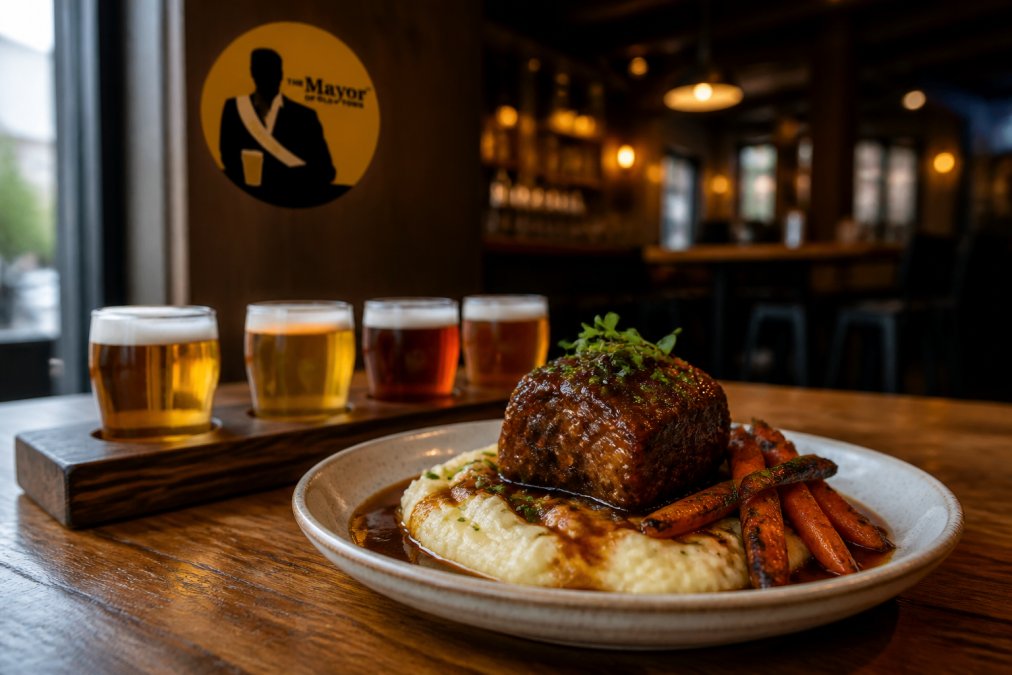
Plating is where upscale pub food earns its price, the same burger reads as casual or bistro style depending on how it lands on the plate. Techniques that work:
- Use negative space. Don’t crowd the plate.
- Add height with stacking or a garnish that stands up.
- Sauce with intent: a swoosh, a drizzle, or a small ramekin, not a flood.
- Vary textures: something crispy, something creamy, something fresh.
Classic Pub Appetizers, Reimagined for an Upscale Menu
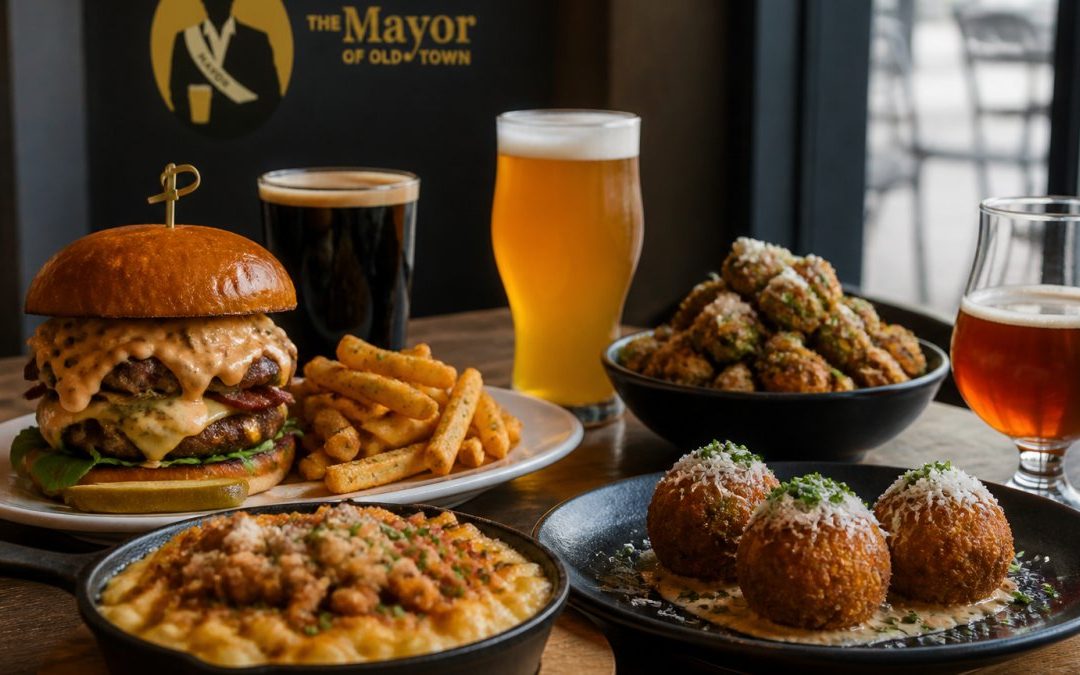
Classic pub appetizers become upscale when you upgrade one or two components and leave the rest familiar. Diners want the comfort they recognize plus a reason to pay more; upgrading everything strips the dish of its reference point.
- Loaded fries → duck fat fries with braised short rib, aged cheddar, and a house aioli. The upgrade is the fat and the braise, not the potato.
- Wings → dry-rubbed and roasted, served with a house-made sauce flight. The upgrade is the cooking method and the sauce variety, not the wing itself.
- Nachos → upgraded with braised meat, fresh salsa, and cotija. The upgrade is the protein and the cheese, not the chip.
- Fried pickles → hand-breaded with a buttermilk batter and a dill ranch. The upgrade is the batter and the dip, not the pickle.
Finger Foods and Shareables Built for Groups
Finger-friendly shareables drive group spending: a table of six orders more when sharing is easy. They arrive faster than entrees and let the table keep ordering all night. Build shareables that are easy to split without a knife, varied in texture and temperature, and priced to encourage a second round. Appetizer platters suit larger parties, letting a group sample several items and raising the average check without anyone feeling upsold, and they use the same prep as individual items, adding revenue without a new station.
Sourcing the Upgrades Without Blowing the Food Cost
An upgraded appetizer only works if the premium component stays inside a viable food cost percentage. Practical patterns:
- Use the trim. Braised short rib for loaded fries can come from the same trim used on a signature sandwich, so the cost is shared across two menu items.
- Buy the sauce, make the finish. House-made aioli and mustard are cheap to produce and carry high perceived value. Keep the protein portion controlled and let the sauce do the talking.
- Cross-utilize the ale. The same local ale used in the beer cheese can appear in the batter, the braise, and the pairing notes. One keg, three menu mentions.
- Price the platter, not just the item. A platter built from three shareables lets you blend a high-cost item with two low-cost ones, protecting the overall margin.
Audit your appetizer list by food cost percentage per item, not by category. A single premium shareable can quietly pull the whole section’s margin down while the rest of the list looks healthy.
Signature Burgers and Sandwiches That Anchor the Menu
A signature sandwich anchors a strong pub menu, it’s what regulars come back for and what defines your kitchen’s point of view.
The best signature burgers share a few traits:
- A specific, named build, not a generic “cheeseburger”
- One standout ingredient that’s hard to find elsewhere
- A house-made sauce that ties the flavors together
Modern Gastropub Menu Trends Reshaping Comfort Food
Modern gastropub menu trends push comfort food in two directions at once: more refined technique and more inclusive options. Both raise the ceiling on what a pub kitchen can charge. Diners no longer see “pub food” and “good food” as opposites, they expect elevated comfort food that still feels casual. A few trends worth watching: Chefs are increasingly balancing these rustic flavor profiles with the nuanced depth achieved by using artisan infused oils to finish plates that bridge the gap between traditional tavern fare and contemporary culinary standards.
- Global flavor profiles on familiar formats, like Korean-spiced wings or birria tacos
- House-made everything: sauces, pickles, breads, and cured meats
- Smaller, shareable plates that let a table build a meal
- Craft beer pairing notes printed right on the menu
Savory Pies, Fish and Chips, and Elevated Comfort Classics
Savory pies and fish and chips are pub classics that reward an upscale approach, diners know what good versions taste like. For fish and chips, the upgrade is in the batter and the fry: a light beer batter made with a local ale, fried to a crisp golden shell, plus hand-cut chips instead of frozen fries. Savory pies follow the same rule, a flaky, house-made crust and a rich, slow-cooked filling turn a simple hand pie into a destination dish.
Dietary-Inclusive Upscale Menus: Beyond the Standard Bar Snacks
Dietary-inclusive menus are no longer optional for a serious pub kitchen. Groups include vegetarians, gluten-free diners, and people cutting back on meat, and a menu that ignores them loses the whole table. Most pubs treat inclusive items as a checkbox, so the result reads as an apology rather than a dish. The fix isn’t a single sad veggie option, it’s building dishes that happen to be inclusive and taste like they belong.
Building Inclusive Dishes That Hold Their Own
A practical approach that keeps the pub feel intact:
- Start from a format, not a restriction. A mushroom and ale hand pie, a crispy cauliflower banh mi, or a charred broccolini flatbread are all naturally vegetarian and all read as pub food. The dish leads with flavor, and the dietary status is a footnote.
- Mark gluten-free, vegetarian, and vegan items clearly on the menu. A small icon set is enough. Guests should not have to interrogate the server to find out what they can eat.
- Build at least one shareable that’s naturally vegetarian and satisfying. A table with one vegetarian diner should be able to order a shareable the whole table wants, not a separate plate for one person.
- Offer a plant-based burger that gets the same plating attention as the beef version. Same bun, same sauce, same garnish, same plate. If it looks like a lesser dish, it sells like one.
The Menu-Engineering Case for Inclusive Items
Inclusive dishes are usually treated as a cost center, but the same menu-engineering logic applies.
- They expand the addressable table. A group of six will choose a pub based on the most restricted diner. One strong inclusive dish can be the reason a large party books.
- They can carry strong margins. Plant-based proteins and vegetable-forward dishes often cost less per plate than beef or seafood, giving you room to price them at a premium if the plating and description justify it.
- They reduce kitchen friction. A dish built from ingredients already in the prep line adds menu breadth without a new station or supplier.
- They belong in the stars column. If an inclusive item sells well and carries a healthy margin, it earns the same menu placement and server attention as any signature dish.
An inclusive dish that a non-restricted guest would order on its own is a menu item. One that only a restricted guest would order is a compromise. Build for the first, and the second takes care of itself.
Are Late Night Food Options Available in Old Town?
Late night food options in Old Town are available, and a strong late-night menu matters more than most pubs admit. Kitchens that stay open later capture a crowd that would otherwise leave hungry. The key is a menu that’s fast to execute without dropping quality: a trimmed version of the main menu works better than a separate, lower-effort list. Keep the signature sandwich, the best shareables, and a couple of comfort classics, and cut the dishes that slow the line down.
Cost-to-Margin Analysis: Making Upscale Ingredients Profitable
Upscale ingredients only work if the math works. Food cost percentage decides whether a premium dish stays on the menu. If a dish costs more to make, you have three levers:
| Lever | What It Does | Trade-off |
|---|---|---|
| Raise the price | Protects margin on premium dishes | Risks pushing the check too high |
| Adjust the portion | Controls cost per plate | Can read as shrinking value |
| Pair with a high-margin side | Lifts the average check | Needs the right pairing to sell |
Track food cost percentage per dish, not just for the whole menu. A single premium item can quietly drag your margin down while the rest of the menu looks healthy.
Conclusion
Building an upscale pub food menu is a balancing act: better ingredients, sharper plating, and inclusive options, all while keeping the math on your side. Get it right and you earn higher checks without losing the laid-back feel guests come for.
Frequently Asked Questions
What defines upscale pub food compared to traditional bar snacks?
Upscale pub food starts with the same comfort-food foundation, then raises the bar on sourcing, technique, and presentation. Instead of frozen mozzarella sticks, you get house-made sauces and seasonal ingredients. Instead of a plain basket, you get intentional plating that makes the dish look as good as it tastes. The goal is elevated comfort food that pairs naturally with a craft beer list, where each item is designed to stand on its own rather than just fill a plate.
How can a gastropub elevate classic comfort food dishes?
The most effective approach is to keep the familiar flavor profile but upgrade one or two elements. A standard burger becomes a signature sandwich when you use a house-made bun, a proprietary sauce blend, and a higher-quality patty. Fish and chips get better with a lighter, crispier batter and a house tartar sauce. The dish still reads as comfort food, but the details signal care. This is the core of modern gastropub menu trends: familiar enough to order without hesitation, refined enough to justify the price.
Are late night food options available in old town?
Yes, late night food options are available in Old Town. The Mayor of Old Town keeps its kitchen open for evening crowds, so you can order from the full upscale pub food menu well past standard dinner hours. Whether you are wrapping up a long day or heading out with a group, the kitchen serves shareables, signature sandwiches, and savory pies alongside the rotating beer list.
What makes a craft beer bar menu stand out?
A craft beer bar menu stands out when the food is designed to pair with the beer, not just accompany it. That means paying attention to flavor profiles: crispy textures that cut through a hoppy IPA, rich and savory dishes that hold up to a stout, and lighter options for a pilsner or saison. A strong menu also balances high-margin items like shareables with premium dishes that anchor the check average. The best menus rotate seasonally, so there is always a reason to come back and try something new.